Showing posts with label agriculture. Show all posts

Sunday, October 31, 2010

Time out

The clocks went back last night in the UK, so perhaps I did get to sleep in just a little bit before the three year old stomped into our bedroom and threw himself into our bed, and said "Wakey, wakey". He twitched the curtains above our head to let in a smidgeon of damp, gray light.

Daylight savings have been controversial for a number of years and the rhetoric is ramping up. A growing lobby is urging that the UK should go to double summer time in the summer and GMT +1 in the winter. A permanent shift of an hour. Folks are even saying a change would combat global warming. (I'm unconvinced).


right twice a day
Euro-sceptics will have noticed this would put us on exactly the same time as Brussels. A conspiracy of closer alignment by fiat rather than treaty.

The Scottish contingency and farmers have been vociferously protesting against the double summer time idea. Let's dismiss the farmers first and out of hand, because farmers raise more complaints than heads of cattle or bushels of wheat.

But the Scots may have a point. It's darker up there in the winter and in the summer is stays light quite late enough already. A +1 shift would mean it would be dark til mid-morning in the winter. Which you don't need a policy review to know would suck.

Personally, I'm against the change. I hate, hate, hate getting up in the dark and this would mean more days of getting up in the dark. And since, I - you know - work. I still wouldn't get to take advantage of more daylight in the winter as I'd be - you know - working. But most people I know here in London are in favor of the change.

A modest proposal

If folks in London want to change so much, let 'em. Let northerly parts of the UK like Scotland or Northern Ireland or westerly bits like Wales stay on GMT or BST in the summer. You see, that would work. Devolution of the clock. An overthrow of the tyranny of time.

I grew up in a state with roughly 10-15% of the population of the UK. And we had two time zones - Eastern in East Tennessee and Central and Middle and West Tennessee. It didn't result in perpetual confusion. It was fine.
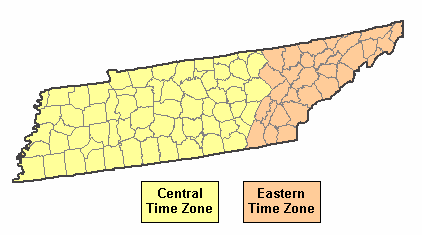


You know it makes sense.


Wednesday, August 13, 2008

Mad princes and weird science

Prince Charles thinks that GM crops are going to destroy everything. Apparently.

In an interview with The Telegraph he....

... expressed the fear that food would run out because of the damage being wreaked on the earth's soil by scientists' research.

He accused firms of conducting a "gigantic experiment I think with nature and the whole of humanity which has gone seriously wrong".

"Why else are we facing all these challenges, climate change and everything?".

Yes, indeed, why else?

I mean I'm not a scientist or anything (well, not a practicing scientist) but I'm pretty sure that there's not a gigantic experiment with the whole of humanity and all the earth that's causing climate change and reducing everything to some kind of radiating rubble.

But, if it's somehow escaped my notice and it's true, I'm betting Dick Cheney's behind it.

Wednesday, July 23, 2008

A real live cow

When I was a sophomore at the University of Tennessee, I took a friend of mine up to Cades Cove. She was beginning her third year, but had never been. It was early Autumn, and though the color wasn't high, I expected we'd see lots of deer. And we did. She'd never seen white tail deer before and she was amazed when I predicted that they'd flash their white tails when I startled them.

But I was even more amazed to find that she was less interested in the deer than in the cattle. There was still at least one working farm in the Cove then and she'd never seen cows before. Not up close like that. See, she was from Philly. A City Girl.

Now, I wasn't raised on a farm or anything like that. But I guess I had a basic working knowledge of cows and certainly I'd been on other people's farms and my granddad sold supplies to farmers. And from a young age I'd been to my cousins' other grandparents and my uncle had let me bottle feed calves as a special treat. You have to make your own fun in small town Tennessee.

I understood that not everyone had experiences like that, but I thought everyone had seen a cow. But I took real joy in her fascination. I did have to explain to her that it wasn't such a good idea to hop the fence and get in with the bullocks trying to pet them.

I don't know what they have in Philly, but around the UK there are City Farms. Back when the Vol-in-Law and I were first married in Sheffield and had no money we used to regularly visit Graves Park and city farm. That was a great city farm. There was a petting area and they had acres of pens stocked with rare breeds - heritage pigs and the woolly mammoth looking highland cattle.

graves park goat and pig

highland cattle-1

When we lived in Coventry, we took one sad, sorry visit to a city farm in what's described in policy circles here as a "deprived area". Apparently, they'd had some unfortunate incidents in the past and so visits to the animals had to be supervised. We were escorted around the livestock by a sickly looking ten year old who kept a close and suspicious eye on how we petted the pony.

Buddy likes animals and I certainly wouldn't want him growing up to be a young adult who's never seen a cow up close and personal.

Buddy and the tractor
Early agricultural training


Where we live now, there's a city farm within walking distance of our house. It's a long walk, but it's doable. On Sunday, we went there, breaking our trip with a stop at an Italian restaurant and a glass of wine overlooking the River Wandle. (Sounds swish, but the Wandle is little better than a drainage ditch in some places).

Deen City Farm isn't exactly a petting zoo, but if you go at a certain time (2 to 3 and some other window in the morning hours) you can buy a plastic cup full of feed pellets to coax the goats and sheep and alpacas close enough to the bars of their pens. to stick your hand in and stroke their woolly coats.

We didn't spend much time on the cows this last visit, as they're not really on eye level with the baby.

Buddy's happy to see the animals, but he's not amazed and he's not cowed. He kicked a greedy goat in the head.

kicking the goat in the head


And stuck his finger in the aviary, much to the delight of some hungry, curious parakeety type things. The bird bit him on the finger, which freaked me out a little (I have a slight avian phobia) but phased him not at all. He withdrew his finger, considered his position and then poked the bird again.

po-tweet

it bit me

Friday, September 14, 2007

A good year for dope?

Regular readers will know I do like to garden. I'm pleased to say my fingers (UK) and thumb (US) are pretty green - I have a nice depth and breadth of knowledge for an amateur gardener. My parents, though, will probably be pleased to note that I know almost nothing about growing marijuana.

I don't know what kind of growing conditions marijuana needs. But just looking at it - and knowing where it grows, I'd guess it needs heat, more light than you'd find in an average basement, and a fair bit of moisture. But maybe not. Despite a bad growing season for most things in Tennessee this year, maybe Cannabis is more drought tolerant than I thought - cause it's been a bumper year for dope in Cocke County.

Tennessee Highway Patrol helicopter pilot, working with the Governor’s Task Force for Marijuana Eradication, spotted marijuana plants in a Cocke County cornfield Monday valued at half a million dollars.

...

It is the largest harvest in Cocke County this year and perhaps the largest marijuana eradication in Tennessee this summer. The more than 45-hundred plants, ranging in height from eight to 15 feet tall, were collected and taken to the Cocke County Highway Department, where they were destroyed Monday evening.


William at Nashville is Talking wonders about the consequences of the Cocke County crackdown:


in a year of unprecedented drought where traditional crops have failed, how many rural farmers in Cocke Co., one of the poorest counties in TN, will not be able to feed their families?


...or indeed keep their families pacified.

Monday, August 13, 2007

A case of mistaken identity

I named Cletus's favorite toy - a jingle bull (he has a bell in him) - Shambo in honor of the slaughtered Hindu holy cow.

shambo

But the Vol-in-Law pointed out the label said it was a donkey. And VolMom left a comment on Shambo's photographic portrait in my Flick account:

That looks more donkey-like than bovine


Can you believe I was once in receipt of an Agricultural scholarship? But we didn't cover livestock toys in Ag 101. Maybe I've just had too many years of city life, trapped like a goose in a pen.

Wednesday, May 09, 2007

scattered pictures and double-eared corn

I've been going through some old photographs - don't know why really - as I have many other things I should be doing. I've noticed there are lots of pictures from the beginning of our marriage - then hardly any. This is partly because my camera broke and I couldn't afford to replace it with a camera I liked.

In the past couple of years I've been taking loads of pictures, but they're all digital. I've been trying to make sure I put stuff from trips into photo books (I did our trip to France and Christmas visit to Tennessee) and annual retrospectives - like A Year in the Garden 2006 rather than just leave them in digital files. And I should probably get my blog printed up and bound into a book - just for posterity.

Anyway, it's interesting looking back on our lives. And I've separated the photos into

  • Please scan and make into a photo book
  • Not very good, but can't bear to throw away (the biggest pile)
  • Throw away (this is the smallest pile)

I've noticed that we were a lot younger and thinner when we first got together. Some of us had more hair. We look quite happy.

I found some old letters, too and managed to avoid the temptation of actually reading them. Many of them are from my grandfather who died almost four years ago and who were planning to name the soon-to-arrive baby after. My grandfather used to send me pictures regularly, too. And clippings from The Tennessean or the Lawrence County Advocate or wherever that he thought might interest me.

For example, I found this snippet of Wilson County News -

The Neal family farm near Tuckers Crossroads is one of just three farms in the state chosen for an important experiment in improving forage for cattle and cutting the farm's dependence on hay for feed, Agriculutral Extension Services Agent Jon Baker said. Baker added that if the proer kinds of grasses are developed for pastures, it will mean less work for the farmers and reduced costs for consumers. As Baker said "Cows are designed to eat forage, not grain." - WARREN DUZAK.

taped to this picture:

wreckage-1

On the back of the picture, it's written in my grandfather's scrawl

This is a picture of the water damage in our shop recently. Insurance has pd all damage but $500 which we are asking the roofers to pay.
I do not know if this in Lawrenceburg - where my grandfather rented antique selling space on the square or if it was in Nashville or Franklin - where over time he had also rented space.

I do not know why the story about experimental forage on the Neal family farm was attached to it. That may be an accident of proximity and tape and time.

-0-

I do know why he sent me the snippet on agriculture. We are kin to the Neals. My great grandfather's mother's maiden name was Neal, his given name was Neal and he and his brother Ben were raised in the home of William Haskell Neal, his maternal uncle, after their father died.

Haskell Neal, as he was known, developed Neal's Paymaster Corn (read more if you're interested about his induction to the Wilson County Agricultural Hall of Fame). This was the first reliably double-eared open pollinated corn. Haskell developed it through selective breeding. My grandfather told me that his daddy remembered harvesting corn with his Uncle Haskell and that Haskell kept a special sack for double eared corn - which he would use for seed corn the following year.


Here's what a Works Progress Administration 1939 survey of the State of Tennessee said about it:


Corn always has been the leading crop in value and volume. For more than 50 years the State has had a yearly average of three million acres in corn. In 1935 the crop amounted to more than 60 million bushels. One third of the corn grown is the high-yield variety known as Neal's Paymaster. It is interesting to note that until 1904, when W. H. Neal of Lebanon developed this variety, most Tennessee farmers had been growing the same type of corn planted centuries before by the mound builders. The major part of the Tennessee crop is consumed in the region of its production.


I recently told somone about this, just kind of casually mentioned it - I'm not sure why but it was vaguely relevant. This person seemed distinctly unimpressed. But it was a really big deal. This effectively doubled yields in a time when many people went hungry.

-0-

Events have conspired lately to make me think of Haskell Neal and his Paymaster Corn. I was listening to a radio show about pacifist farming communes in England during World War II and one of the former residents was talking about how they strove to improve yields - and how if they could only produce twice as much corn (this actually probably means wheat) from the same acreage what a difference that would make to the world. I thought of Haskell Neal. He did that.

And last night, I was watching a show about genetic modification and some foodie journalist was absolutely appalled by the selective breeding efforts of livestock farmers to produce some really big beef cattle - Belgian Blues. He seemed to think selective breeding was some kind of new fangled invention, somewhere along the lines of Frankenstein food. How freaking ignorant. How could someone who is supposed to write about food know so little about how food is produced? A biologist on the show pointed out that so long as we have had agriculture we've had selective breeding. I thought about my great-grandfather and Haskell Neal's sack of double-eared seed corn.

Thursday, May 03, 2007